OUGIST KNOWLEDGE BASE · PRACTICAL FIRE SAFETY
A quick trip away from the stove. A charger tucked under a pillow. One more appliance on a power strip. Fire prevention often begins with ordinary decisions that are easy to overlook when nothing has gone wrong yet.
These five examples come from our home-safety carousel series. They are an editorial checklist, not a statistical ranking. Use them to walk through your own home, correct what you can safely correct, and arrange service for damaged equipment.
1. Leaving active cooking unattended
Cooking oil and food can overheat while your attention is in another room. A timer is useful, but it cannot notice a smoking pan or move a towel away from a hot burner. USFA advises staying in the kitchen when frying, boiling, grilling or broiling food.
Prepare the area before turning on the heat: clear packaging and cloths, turn handles toward the back, and keep a suitable lid nearby. If oil begins smoking, reduce the heat or turn it off. For a small, contained pan fire, slide a lid over the pan and turn off the burner only if you can do so safely. Leave it covered until completely cool.
What to do
- Turn the burner off before leaving the kitchen.
- Keep towels, paper and wooden utensils away from the stovetop.
- Never pour water onto a grease fire or carry a burning pan.
Keep in mind: If the fire spreads or you feel unsure, get out, stay out and call 911 from outside.
Source: USFA: Cooking fire safety.

2. Treating a power strip as extra electrical capacity
A power strip provides more places to connect equipment; it does not increase the capacity of the strip, outlet or circuit. The number of occupied sockets alone cannot tell you whether the load is safe. A few high-power appliances can create a heavier load than several small electronics.
Check equipment labels and the strip rating. If you cannot establish that the combination is appropriate, ask an electrician rather than experimenting. Repeated breaker trips, damaged cords and loose connections need attention even when the strip has unused sockets.
What to do
- Plug portable space heaters directly into a suitable wall outlet.
- Never plug one power strip into another.
- Stop using damaged strips or plugs that fit loosely.
Keep in mind: A surge protector is not permission to exceed an electrical rating.

3. Charging a device on a bed or couch
Soft bedding can cover a device or charger and trap the heat produced during charging. A pillow can shift after you fall asleep, turning what looked like an open space into an insulated pocket. A hard, clear charging surface makes it easier to maintain airflow and notice a problem.
Use the charging equipment specified by the device manufacturer. An apparently compatible connector does not prove that every charger is appropriate. Unusual heat, swelling, odor, leakage or unusual noises mean the device needs to be taken out of service; smoke or rapid deterioration is an emergency.
What to do
- Charge on a stable, hard surface away from bedding and other combustibles.
- Keep the device and adapter uncovered.
- Ask the manufacturer or local battery program about damaged-battery handling.
Keep in mind: Do not puncture a swollen battery or put it in household trash. If it smokes, move away and call 911.
Source: USFA: Battery fire safety.

4. Letting blankets or curtains crowd a heater
A portable heater needs separation from things that can burn. Nearby fabric can heat dangerously even without touching the appliance. USFA recommends keeping combustible items at least 3 feet away; follow any greater clearance specified for your model.
Look at how the room changes during use. A curtain can move, a blanket can fall and a chair can be pushed closer. Set the heater on a stable, level surface where ordinary movement will not undermine its clear space.
What to do
- Maintain at least 3 feet of clearance from combustible materials.
- Turn the heater off before leaving the room or going to sleep.
- Use a wall outlet directly and follow the operating instructions.
Keep in mind: Tip-over and overheat protections do not replace safe placement.
Source: USFA: Heating fire safety.

5. Skipping dryer lint and airflow checks
Lint is combustible, and accumulation can interfere with airflow. Cleaning the filter is a small routine with a clear purpose: remove fuel and help the dryer exhaust heat as designed. Running the dryer with no filter is not a solution to poor airflow.
For a vented dryer, also check that the exhaust duct is not crushed and that the outside vent opens during operation. Longer drying times or unusual heat deserve investigation. Ventless models have different maintenance requirements, so use your specific manual rather than applying every vented-dryer instruction.
What to do
- Clean lint from the filter before and after each load.
- Keep the area around the dryer clear and inspect the exhaust path.
- Arrange qualified servicing when performance or heat changes unexpectedly.
Keep in mind: A clean lint screen cannot compensate for a blocked exhaust duct.
Source: USFA: Clothes dryer fire safety.

A practical check to do today
- Choose one clear charging spot for the household.
- Check heater clearance and power-strip ratings.
- Clean the dryer filter and check its maintenance instructions.
- Test smoke alarms and confirm the outdoor meeting place.
Frequently asked questions
Does a full power strip automatically mean it is overloaded?
No. Connected load, equipment ratings and condition matter. A partly occupied strip can still be unsuitable for high-power appliances.
How far should a portable heater be from a curtain?
Keep combustible materials at least 3 feet away, and follow any greater separation required by the heater manufacturer.
Should I fight a small kitchen fire?
Only consider action when the fire is contained, the correct method is available, you are safe from smoke and you have a clear exit. If unsure, leave and call 911.
Keep learning
Review the equipment after the safety check
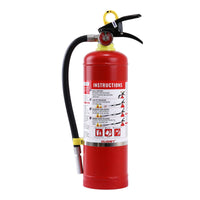
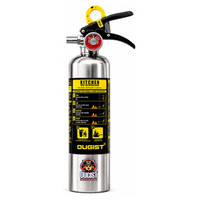
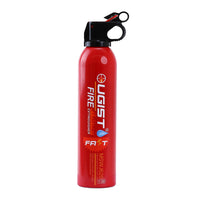
After addressing preventable hazards, review whether your household equipment matches the fire classes on its label. OUGIST’s Essential 2.5 lb ABC extinguisher is one option to examine for its specified uses. It does not replace safe charging, appliance maintenance, alarms or evacuation.
Read product details and instructions
September 2026 preparedness offer: OUGIST’s National Preparedness Month promotion provides an extra 15% off eligible storewide purchases automatically at checkout, through September 30, 2026 at 11:59 p.m. MDT. Check current availability and final pricing at checkout. This independent OUGIST promotion is not sponsored or endorsed by FEMA or NFPA.
By Mark, Ougist Content Team. Sources and product information reviewed September 13, 2026. Images are illustrative AI-generated visuals; they are not photographs of documented incidents.
Sources and further reading
- USFA: Cooking fire safety
- USFA: Appliance and electrical fire safety
- USFA: Battery fire safety
- USFA: Heating fire safety
- USFA: Clothes dryer fire safety
- USFA: Smoke alarms
- USFA: Home fire escape plans
- USFA: Choosing and using fire extinguishers
NFPA reference: NFPA: Cooking Safety tip sheet (PDF)