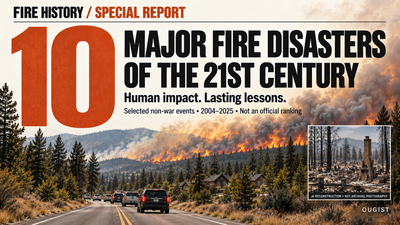
Georgia's Pineland Road Fire Is a Wake-Up Call: Your 2026 Wildfire Preparedness Checklist
When you think "wildfire season," your mind probably goes to California, Oregon, or Colorado. But this May, the conversation has shifted dramatically — and the Pineland Road Fire in southeast Georgia is why.
Tracked in real time by IQAir's wildfire monitoring platform, the Pineland Road Fire has already burned through thousands of acres, triggered air quality alerts across multiple Georgia counties, and earned the unfortunate designation of being one of the most severe wildfires in the US Southeast this month. As of May 16, 2026, containment remains an uphill battle, and communities downwind are feeling the effects.
If you live anywhere in the Southeast — or honestly, anywhere in the US where dry conditions are becoming the new normal — this article is for you. Here's what's happening, why it matters, and exactly what you can do to protect your home and family.
What's Happening in Georgia Right Now
The Pineland Road Fire ignited in a rural stretch of southeast Georgia's coastal plain — an area not traditionally known for large-scale wildfires. But a combination of prolonged drought, unusually low humidity, and persistent winds has turned the landscape into a tinderbox. Fire crews from across the region, led by the Georgia Forestry Commission with federal mutual-aid support, have been working around the clock to establish containment lines.
IQAir's real-time wildfire tracker shows air quality index (AQI) readings reaching "Unhealthy" levels well beyond the immediate fire zone, with smoke plumes visible on satellite imagery stretching for miles. Several communities are under pre-evacuation advisory — meaning residents should be packed and ready to leave at a moment's notice.
Why Wildfire Risk Is Expanding — and What It Means for Homeowners
The Pineland Road Fire isn't an isolated incident — it's part of a broader pattern. Climate data shows that wildfire seasons in the United States are getting longer, and regions that historically saw relatively few large fires are now facing increased risk. The Southeast, with its mix of forested land, agricultural areas, and growing wildland-urban interface communities, is increasingly vulnerable.
For homeowners, this means one thing loud and clear: wildfire preparedness isn't optional anymore, no matter where you live. The good news? There's a lot you can do — and much of it is straightforward and affordable.
Your 2026 Wildfire Preparedness Checklist
🏡 1. Create Defensible Space Around Your Home
Fire needs fuel. Your most powerful defense is removing that fuel from the immediate area around your house:
- 0–5 feet from the house: Remove all dead plants, leaves, pine needles, and debris. Replace bark mulch with gravel or stone. Trim tree branches that hang over the roof. This is your "ember-resistant zone" — the most critical 5 feet.
- 5–30 feet: Keep lawns mowed short, space out shrubs and trees to prevent fire from "laddering" upward, and remove dead vegetation promptly.
- 30–100 feet: Thin dense tree stands, clear fallen branches and debris, and maintain access paths wide enough for emergency vehicles.
🚗 2. Build an Evacuation Go-Bag
When an evacuation order comes, you may have 10 minutes or less to get out. Every household member should have a go-bag ready:
- Copies of important documents (insurance policies, IDs, medical records) in a waterproof pouch
- One week's supply of prescription medications
- N95 or P100 masks for wildfire smoke protection
- Phone chargers, portable battery packs, and a battery-powered radio
- Basic first aid kit, bottled water, and non-perishable snacks
- Change of clothes and sturdy shoes
- Pet supplies (food, leash, carrier, vaccination records)
Store go-bags near your primary exit — not in a closet somewhere. And keep your vehicle's gas tank at least half full at all times during fire season.
🔥 3. Equip Your Home with the Right Fire Safety Tools
This is where preparation meets practicality. Having the right equipment on hand can make the difference between a small, manageable incident and a disaster:

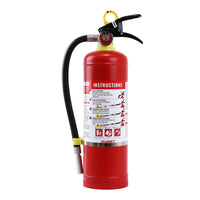
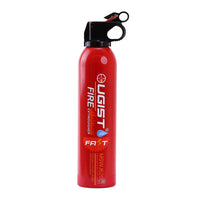
- Fire extinguishers (at least one per floor): The kitchen is non-negotiable — about 50% of all home fires start there. A multi-purpose ABC dry powder extinguisher covers ordinary combustibles, flammable liquids, and electrical fires — basically everything you'd encounter in a home setting. We also recommend keeping a compact extinguisher in your vehicle, especially if you live in or travel through wildfire-prone areas.
- Fire blanket for the kitchen: For stovetop grease fires, a fire blanket is often faster and cleaner than an extinguisher. Just pull the tabs and drape it over the flame — no mess, no chemical residue, and no skill required.
- Smoke detectors on every level: Test them monthly and replace batteries twice a year. A good habit: change batteries when you change your clocks for daylight saving.
- Escape ladder for multi-story homes: If your bedrooms are above ground level, an emergency escape ladder is essential equipment — not a "nice to have."
Fire Safety Essentials for Every Home
These aren't luxury purchases — they're essential safety investments that every home should have. And the cost is surprisingly modest compared to the peace of mind they provide.

ABC Dry Powder Fire Extinguisher — 2.5lb
$30.96
Compact, multi-purpose extinguisher rated for Class A, B, and C fires. Perfect for kitchen, garage, and vehicle — covers ordinary combustibles, flammable liquids, and electrical fires.
Shop Now
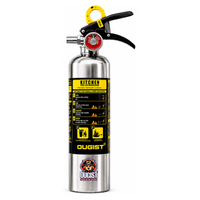
K-Rated Kitchen Fire Extinguisher
$42.48
Specifically formulated for cooking oil and grease fires — the most common type of kitchen emergency. Water-based agent cools and smothers flames without spreading the grease.
Shop Now
Fire Safety Blanket — 40"×40"
From $22.12
Fiberglass fire blanket in a decorative hanging pouch — no mess, no training required. Simply pull the tabs and drape over stovetop flames for instant suppression.
Shop Now📱 4. Stay Informed with Real-Time Tools
Knowledge is protection. Here are the tools you should have bookmarked during fire season:
- IQAir Wildfire Map — Real-time fire tracking, air quality data, and wind direction
- AirNow.gov — EPA's official air quality monitoring network
- Your county's emergency alert system — Sign up for text/SMS alerts
- NIFC (National Interagency Fire Center) — National-level fire outlook and resource status
Check these at least once a day when fire conditions are elevated in your region. If you see a fire within 50 miles of your location, switch to checking multiple times a day — conditions can change fast.
The Bottom Line: Preparedness Is Power
The Pineland Road Fire is a sobering reminder that wildfire isn't a regional problem anymore — it's a national one. But the good news is that preparedness works. Homes with defensible space are significantly more likely to survive a wildfire. Families with evacuation plans get out faster and with less panic. And having the right fire safety equipment at home means you're never helpless in the face of a small fire that could otherwise spiral out of control.
Take an afternoon this weekend. Walk around your property. Check your smoke detectors. Order that fire extinguisher you've been meaning to get. Pack a go-bag. It's not about living in fear — it's about living with confidence, knowing you've done the smart thing for the people who matter most.
Additional references: Georgia Forestry Commission, Ready.gov Wildfire Preparedness, National Interagency Fire Center