AI Is Detecting Wildfires Before They Spread — Here's How It's Changing Fire Safety in 2026
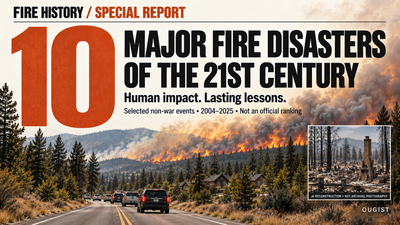
Wildfire season in the western United States has grown longer, more intense, and more destructive with each passing decade. But there's some genuinely good news on the horizon: artificial intelligence is entering the fight, and it's already making a measurable difference. Multiple western states — including California, Oregon, Colorado, and Washington — are now deploying AI-powered early wildfire detection systems that combine satellite imagery with ground-level sensor networks to spot fires faster than ever before.
Here's how the technology works, what the early results look like, and — just as importantly — what it means for everyday fire safety at home.
The Technology Behind AI Wildfire Detection
Modern AI wildfire detection isn't one single gadget — it's a layered system that combines multiple data sources to create a comprehensive early warning network.
Satellite Thermal Imaging
The first layer is satellite-based detection. Low-earth orbit and geostationary satellites equipped with thermal infrared sensors continuously scan the planet's surface for heat anomalies. These aren't the kind of satellites that take pretty pictures — they're looking for temperature signatures that deviate from the surrounding environment, even by just a few degrees.
Machine learning algorithms then process this flood of thermal data in real time. The AI has been trained on millions of data points to distinguish between an actual wildfire and a false alarm: an industrial facility, a sun-baked rock face, or a farmer's controlled burn. As the system ingests more data, its accuracy continues to improve.
Ground-Level Sensor Networks
Satellites are powerful, but they're not perfect. Cloud cover, satellite revisit intervals, and limited resolution can create blind spots. That's where the second layer comes in: ground-level sensor networks deployed directly in high-risk forest areas.
These networks include:
- Smoke and particulate sensors that detect the chemical signature of burning vegetation
- High-definition cameras mounted on towers and ridges, now enhanced with AI that can automatically identify smoke plumes in video feeds
- Weather stations that track wind speed, humidity, and temperature — the key variables that determine how fast a fire will spread
Programs like the ALERTWildfire camera network, which has been operating for years across California and Nevada, are getting a significant upgrade as AI is layered on top to eliminate the need for human operators to watch screens around the clock.
Integrated Response Platforms
The real power comes from tying it all together. Modern AI platforms integrate satellite data, ground sensor feeds, weather forecasts, terrain maps, and historical fire data into a single operational dashboard. When the AI detects a potential ignition, it can automatically pinpoint GPS coordinates, model the fire's likely spread path based on current conditions, and alert the nearest fire station — all within minutes.
Real-World Results: Faster Response, More Acres Saved
The numbers coming out of pilot programs are encouraging. According to the U.S. News & World Report (May 2026), AI-assisted detection systems have reduced detection-to-response time by 30 to 45 minutes in several pilot regions across the West.
To understand why that matters, consider this: under hot, dry, and windy conditions, a wildfire can double in size every 5 to 10 minutes. A fire that's caught 30 minutes earlier might cover 2 acres instead of 200. That's not just about property and timber — it's about giving families precious extra time to evacuate safely, and giving firefighters a fighting chance to contain the blaze before it becomes unstoppable.
Limitations: What AI Can't Do (Yet)
For all the promise, it's important to keep the technology in perspective. AI wildfire detection is a force multiplier, not a silver bullet. Key limitations include:
- Coverage gaps: The most remote wilderness areas still lack adequate sensor coverage and reliable satellite revisit times.
- False negatives: A fire that ignites under dense tree canopy, during heavy cloud cover, or in the middle of the night can evade even the best systems.
- Infrastructure costs: Installing and maintaining sensor networks across millions of acres of forest requires sustained funding and logistical commitment.
- Human dependency: Detection is step one. You still need well-funded, well-staffed fire agencies with aircraft, tankers, and ground crews to actually fight the fire.
What This Means for Home Fire Safety
Here's the thing about early detection — whether we're talking about AI spotting a wildfire from space or a smoke alarm going off in your hallway, the principle is exactly the same: early warning saves lives.
While satellites and sensor networks do their job watching over millions of acres of public land, what's happening inside your home matters just as much. Technology can detect a fire faster than ever before, but when a fire starts in your kitchen, garage, or workshop, the "response team" is you.
That's why every household should have:
- Working smoke detectors on every floor and in every sleeping area
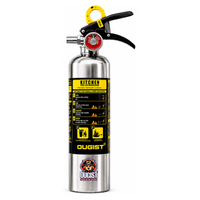
- An accessible fire extinguisher in the kitchen, garage, and vehicle
- A fire blanket for small kitchen fires and emergency use
- A practiced evacuation plan that everyone in the family knows
AI can spot a fire from orbit, but it can't hand you an extinguisher when your stove catches fire. That part is still up to you. Here are the essentials every home needs:

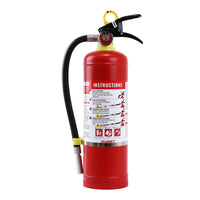
ABC Dry Powder Fire Extinguisher — 2.5lb
Our best-selling mid-size extinguisher. Effective against wood, grease, electrical, and flammable liquid fires. Perfect for kitchens, garages, and workshops.
Shop Now
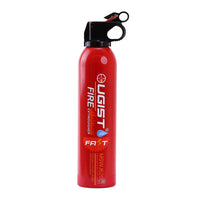
ABC Dry Powder Fire Extinguisher — 1.3lb
Compact and portable — ideal for your car, RV, boat, or campsite. Same ABC-rated protection in a grab-and-go size.
Shop NowThe Future of Fire Safety Technology
The convergence of AI, satellite technology, and IoT sensors represents a genuine leap forward in wildfire management. In the coming years, we're likely to see even tighter integration — think AI models that not only detect fires but accurately predict their behavior hours in advance, automated drone fleets that can deploy on detection, and consumer-grade sensors that give homeowners real-time threat assessments for their specific location.
But technology, no matter how advanced, works best when paired with basic preparedness. The future of fire safety isn't just AI — it's AI plus smoke alarms, plus extinguishers, plus evacuation plans, plus a culture that takes fire risk seriously.
Early detection buys time. Being prepared is what you do with it.