Your Car Is Not a Power Strip
A family car can power a phone, dash camera, cooler, or other accessory. That convenience does not turn every 12-volt outlet or USB port into an unlimited household power strip.
Each vehicle outlet and circuit has limits set by the vehicle maker. Each accessory has its own requirements, too. The safe match comes from the vehicle manual, the outlet label, and the accessory instructions—not a universal number from a video or shopping page.
More places to plug in do not create more electrical capacity. Check the vehicle instructions before adding accessory loads.
Start with the three labels that matter
Before plugging in an accessory, check:
- The vehicle owner's manual for the outlet's intended use and limits.
- The marking beside the outlet or port.
- The accessory's input, cable, adapter, and installation instructions.
Do not assume the same outlet in another vehicle has the same capacity. Do not assume that adding a splitter, adapter, or inverter increases what the circuit can provide. More places to plug in are still connected to a limited circuit.
If several devices are needed for a family trip, add up only the loads using the method in the vehicle and device instructions. If the instructions are unclear, ask the vehicle manufacturer, accessory maker, or a qualified automotive professional before use.


Stop using accessories that show warning signs
An accessory should not stay in service when its plug or cable is:
- Loose in the outlet.
- Cut, crushed, frayed, or otherwise damaged.
- Discolored.
- Producing an unusual odor.
- Abnormally hot.
Hot, loose, damaged, discolored, or producing an unusual odor? Stop using the accessory.
Warmth can vary by product, so use the accessory instructions as the reference. Abnormal heat, a changing odor, or discoloration is a stop signal—not a reason to keep testing during the drive.
Switch off and stop using the accessory as its instructions direct. Do not take energized equipment apart, hold a loose plug in place, wrap damaged wiring as a travel fix, or stack another adapter on top of the problem.


A fuse is protection, not approval
A fuse opens a circuit when current exceeds its designed protection level. It does not certify that every connected device or installation is correct.
Repeated fuse failure is a reason for diagnosis. It is not a reason to install a larger fuse.
If a fuse fails repeatedly, the circuit needs diagnosis. Replacing it again and again without finding the cause can leave the underlying fault in place. Installing a higher-rated fuse is not a repair and can defeat the protection selected for the circuit.
Use only the fuse type and rating specified by the vehicle manufacturer. Because fuse access and electrical layouts vary, have repeated failures checked by a qualified automotive professional instead of treating them as a do-it-yourself experiment.

Use professional installation for permanent power
Dash cameras, radios, coolers, inverters, and other accessories may be sold with permanent-power options. A neat-looking installation can still be wrong if it ignores wire protection, routing, connection points, or the vehicle's safety systems.
Have a qualified installer handle non-factory wiring, fuse-tap power, or permanent installation. Give the installer both the vehicle instructions and the accessory instructions.
Ask how the work avoids:
- Airbag zones.
- Moving seat parts.
- Sharp edges.
- Heat sources.
- Moisture.
- Required service access.
Professional help is especially important when the accessory behaves differently after installation, drains the battery, creates an odor, becomes unusually hot, or causes repeated fuse failures.
What the fire-safety research says
The U.S. Fire Administration identifies mechanical or electrical malfunctions and collisions as common causes of vehicle fires. It recommends regular maintenance by a trained mechanic and warns drivers to act on warning signs instead of delaying service.
NFPA highway-vehicle fire data identifies electrical wire or cable insulation among the common items first ignited. That finding is for highway vehicles as a group; it should not be described as a passenger-car-only statistic.
Correct the electrical condition before relying on emergency equipment.
An extinguisher does not repair an electrical fault
A portable fire extinguisher cannot reduce an accessory's load, repair insulation, correct a short circuit, replace the proper fuse, or make unsafe wiring acceptable.
If the vehicle is smoking or on fire, stop safely, switch off the engine, get everyone out, move at least 100 feet away and away from traffic, and call 911.
Do not return to the vehicle for equipment.
For a fault that has not become a fire, the order is simpler:
- Stop using the suspect accessory.
- Follow the vehicle and accessory instructions.
- Have repeated or unexplained problems professionally diagnosed.
- Complete the repair.
- Then review the road kit.
Build the road kit after the circuit is right
Once electrical faults, wiring concerns, and installation questions have been properly resolved, emergency equipment can become part of a more complete roadside preparedness plan.
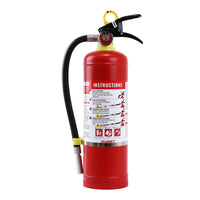
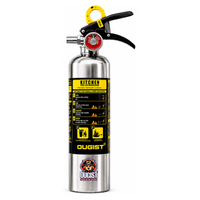
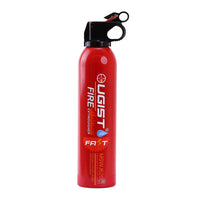
The OUGIST Portable Commuter Car Fire Safety Kit combines practical emergency-preparedness tools for commuting, family driving, and road travel.
Any included fire-safety product should be used only according to its physical label and instructions and only for an appropriate, small, contained fire within its marked fire classes.
Important: Emergency equipment does not repair overloaded circuits, damaged wiring, incorrect fuses, or unsafe installations.
It also does not replace evacuation, professional electrical service, 911, or emergency responders.
Fix the circuit first. Build the road kit second.
View the Portable Commuter Car Fire Safety Kit →Safety References
U.S. Fire Administration — Vehicle Fire Safety
https://www.usfa.fema.gov/prevention/vehicle-fires/
NFPA — Vehicle Fires
https://www.nfpa.org/education-and-research/research/nfpa-research/fire-statistical-reports/vehicle-fires