Product Recall Brief · Fire Extinguisher Safety
A fire extinguisher or fire spray is bought for the moment when everything else has gone wrong. That is why a product that can deteriorate in storage creates two risks at once: the pressurized container may rupture, and the device may not work when a fire starts.

What Happened—and Why the Recall Matters
On September 10, 2026, the CPSC announced a Fast Track Recall involving HERO Fire Spray canisters imported by Prepared Hero. Five days later, FOX10/WALA in Mobile, Alabama, brought the story to a wider local audience. The media report did not announce a second recall; it summarized the federal notice and added local disposal information for Mobile residents.
- September 10, 2026: CPSC publishes recall number 26-755 for about 31,000 units.
- September 15, 2026: FOX10/WALA reports the recall and explains the rupture, burn and failure-to-operate risks.
- Consumer action: Owners of the affected batch are told to stop using it immediately and follow the CPSC-linked replacement and disposal process.
The date code printed on the bottom of the affected canister. CPSC calls it a date code, not an expiration date.
The estimated number of recalled units in the United States—not the number of failures.
Reports of canisters exploding or deteriorating while in storage.
The hazard is serious because of what could happen, not because the notice documented deaths or injuries.
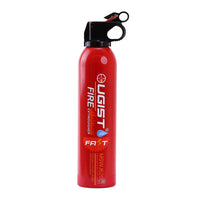
The canisters were sold online through PreparedHero.com and Amazon.com from approximately October 2024 through January 2026 for $18 to $30. CPSC describes them as red-and-blue or red 20-fluid-ounce canisters with a black plastic release tab. They were manufactured in China and imported by Prepared Hero of Sheridan, Wyoming.
Important scope: the notice identifies the affected batch by the bottom code 09/2024. It does not say that every Prepared Hero product or every HERO Fire Spray date code is recalled. Check the code on the product you actually own.
How to Check Whether Your Canister Is Affected
Do not rely on color alone. Similar-looking aerosol fire sprays exist across many brands. Turn the canister only as needed to view the bottom without pressing the release mechanism, then look for the clearly printed date code.

If the bottom says 09/2024: stop using the canister immediately. Do not discharge it to “test” whether it still works, and do not keep it as backup equipment while waiting for a replacement.
What Consumers Who Own the Recalled Fire Spray Should Do
- Stop using it immediately. Move other people away if the canister is visibly swollen, leaking, severely corroded or otherwise unstable. Do not handle a damaged pressurized container more than necessary.
- Confirm the bottom code. The affected code is 09/2024. Use the CPSC recall photographs—not this article's illustrations—to confirm the product appearance.
- Document the product. The recall process requires photographs, including the date code. Keep the canister until the required documentation is complete.
- Follow the replacement instructions linked by CPSC. The remedy listed in the federal notice is a free replacement.
- Contact your local household hazardous-waste facility before traveling. Ask whether it accepts pressurized aerosol or fire-suppression canisters and follow local and state rules.

CPSC specifically warns against placing the recalled canister in household trash or the general recycling stream. A municipal household hazardous-waste center may accept it, but not every facility accepts pressurized containers. If your local center does not, contact the municipality for instructions rather than improvising a disposal method.
Why an Unreliable Fire Extinguisher Can Be So Dangerous
A visibly broken safety product is easier to distrust. A canister sitting quietly in a cabinet is different: it can create a false sense of readiness until an emergency exposes the failure. That makes deterioration, poor construction, counterfeit labeling, physical damage and neglected maintenance especially serious in fire equipment.

1. The container itself may become a hazard
Pressurized containers store energy. If the container, valve or seam loses integrity, rupture or leakage can occur during storage. Never puncture, heat, crush or incinerate a suspect canister.
2. The device may fail at the worst possible moment
A fire can grow while someone repeatedly tries a device that will not discharge. That delay can reduce the time available to leave. Portable extinguishers are secondary protection; working smoke alarms, a practiced escape plan and prompt emergency calls remain essential.
3. The wrong agent can make the response ineffective
One red container is not automatically suitable for every fire. Ordinary combustibles, flammable liquids, energized electrical equipment and commercial cooking oils present different hazards. The product label and local requirements must match the intended use.
4. A recall can change the value of apparently unused equipment
“Never used” does not mean “still dependable.” Storage conditions, age, corrosion, pressure loss, damaged seals and an active recall can matter even when the device looks untouched.
The Larger Consumer Lesson
This recall is a reminder to treat fire equipment as life-safety equipment rather than a decorative purchase. A low price, compact size or viral demonstration does not establish reliability. Nor does a dramatic video prove that a product will remain functional after years in a kitchen, garage, vehicle or utility closet.
- Register safety products when the manufacturer offers registration, so recall notices have a better chance of reaching you.
- Keep the receipt, model information, serial or date code and a photo of the label in your household records.
- Check CPSC recalls when buying used equipment and periodically review the safety equipment already in your home.
- Inspect devices according to their labels and manuals; replace or service them when required.
- Do not rely on one portable device as your entire fire-safety plan.
How to Choose a Fire Extinguisher or Fire Spray

- Start with the hazard. Class A covers ordinary combustibles; B covers flammable liquids; C covers energized electrical equipment; K is intended for commercial cooking oils and fats.
- Check the exact label. Confirm the fire classifications, operating instructions, limitations and replacement or service requirements.
- Look for independent evaluation. The U.S. Fire Administration advises choosing an extinguisher approved by an independent testing laboratory.
- Buy from a traceable seller. Keep documentation and avoid products with missing, contradictory or poorly printed safety information.
- Choose a size you can handle. A larger unit is not useful if the intended user cannot safely lift, aim and operate it.
- Plan placement before purchase. Keep equipment visible, accessible and near an exit—not behind the likely fire.
- Check recall history. Search the CPSC database by brand and model, particularly for used or older safety equipment.
- Know when not to fight. Leave if the fire is spreading, smoke threatens your route, you lack a clear exit or you are unsure the device is appropriate.
A practical rule from USFA guidance: consider using a portable extinguisher only when the fire is small and contained, everyone has been alerted, emergency services have been called and you have a clear escape route behind you. When in doubt, get out, stay out and call 911.
For common household hazards
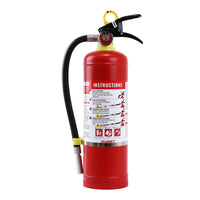
An ABC-rated dry-chemical extinguisher can cover several common hazard classes, but the exact product label, size and local requirements still control. Compare those details before choosing a unit.
View an OUGIST 2.5 lb ABC optionFor commercial cooking-oil hazards
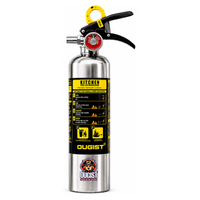
Class K equipment is designed for commercial cooking oils and fats. It is not interchangeable with a generic spray simply because both products are red or compact.
View an OUGIST Class K optionProduct links are examples from the OUGIST catalog, not replacements for an authority having jurisdiction, fire-protection professional or the instructions on a specific product label.
Frequently Asked Questions
Are all Prepared Hero fire products recalled?
The CPSC notice identifies HERO Fire Spray canisters with the bottom date code 09/2024. Do not extend the notice to every product or date code without official confirmation.
Were 31,000 canisters reported to have failed?
No. About 31,000 units are included in the recall. The company had received nine reports of explosion or deterioration in storage when CPSC published the notice.
Did the recall involve injuries or deaths?
No injuries were reported in the CPSC notice. “Risk of serious injury or death” describes the potential severity if a pressurized canister ruptures or fails during a fire.
Can the recalled fire spray go in household trash or recycling?
No. CPSC says not to use ordinary trash or general recycling because the canister is pressurized. Contact a local household hazardous-waste facility or municipality for instructions.
Is 09/2024 an expiration date?
The official notice calls 09/2024 a date code used to identify the affected batch. It should not be reinterpreted as an expiration date without additional manufacturer documentation.
References & Further Reading
- U.S. Consumer Product Safety Commission, “Prepared Hero Recalls Fire Spray Canisters Due to Risk of Serious Injury or Death from Fire and Burn Hazards”, recall number 26-755, September 10, 2026.
- FOX10/WALA, “Fire spray canisters recalled for rupture, burn risk”, September 15, 2026.
- U.S. Consumer Product Safety Commission, “Learn About the Fast-Track Program”.
- U.S. Fire Administration, “Choosing and Using Fire Extinguishers”.
- National Fire Protection Association, “Fire Extinguishers”.
Published September 18, 2026. Recall information can change; use the linked CPSC notice for the latest federal instructions. The generated images in this article are educational illustrations and are not photographs of Prepared Hero products.