OUGIST KNOWLEDGE BASE · PRACTICAL FIRE SAFETY
Some vehicle problems announce themselves with an obvious breakdown. Others look like a small drip, a fuse that keeps failing or a temperature gauge moving faster than usual.
This checklist focuses on everyday passenger-vehicle maintenance and the five situations in our driver-safety carousel. It is not a diagnostic procedure or a guide to fighting an electric-vehicle battery fire. A qualified mechanic should investigate faults before another journey.
1. Fluid leaks you keep putting off
A new patch under the car deserves attention, but its color or appearance alone is not a reliable diagnosis. Air-conditioning condensation is different from leaking fuel or oil, and a driver should not assume every puddle is harmless—or that every drip is combustible.
Have leaks checked by a trained mechanic. Fuel or oil reaching hot components can create a serious hazard. If you notice a strong fuel smell, smoke or a rapidly worsening problem, stop safely and move people away instead of trying to reach a workshop under the vehicle’s own power.
What to do
- Arrange inspection for unexplained fluid loss or recurring leaks.
- Do not crawl beneath a hot vehicle to investigate a suspected fire hazard.
- Keep maintenance records and report changes clearly to the mechanic.
Keep in mind: A small recurring leak is a maintenance issue before it becomes a roadside emergency.
Source: NFPA: Car Fire Safety tip sheet.

2. Electrical warning signs and repeated fuse failures
Damaged or loose wiring and recurring electrical faults need investigation. A fuse that blows repeatedly is not asking for a larger fuse; it may be interrupting a condition that needs repair. Never bypass a protective device or replace a fuse with a higher rating to keep an accessory running.
Aftermarket accessories should be installed using the vehicle and accessory manufacturers’ requirements. Loose connectors, damaged insulation or a burning-plastic smell are reasons to stop using the affected equipment. If smoke or fire develops, focus on safe stopping and evacuation rather than diagnosing the circuit.
What to do
- Report repeated fuse failures and intermittent electrical problems.
- Use only the specified fuse type and rating.
- Have damaged wiring and accessory installations professionally checked.
Keep in mind: Restoring power is not the same as resolving a fault.
Source: NFPA: Car Fire Safety tip sheet.

3. A sudden rise in engine temperature
A rapid temperature change or warning light can signal a cooling-system problem. It does not automatically mean there is a fire, but continuing to drive can worsen the situation. Follow your vehicle’s warnings and pull over safely when required.
Do not open a hot cooling-system cap; pressurized hot coolant can cause severe burns. If you suspect fire under the hood, keep the hood closed because opening it can make the fire grow. Once safely stopped, distinguish a maintenance call from an emergency: smoke, flames or a burning smell require immediate action to protect occupants.
What to do
- Find a safe stopping place and follow the owner’s manual.
- Keep clear of hot cooling-system caps and components.
- If fire is suspected, turn off the engine, get out and call 911.
Keep in mind: Do not lift the hood to get a better look at a suspected fire.
Source: USFA: Vehicle fire safety.

4. Parking over dry grass or other vegetation
Hot exhaust components can ignite vegetation beneath a vehicle. A car that has been switched off may still have a very hot exhaust system. That makes parking location important after a normal drive as well as during a breakdown.
Choose paved or otherwise suitable cleared parking areas. Avoid dry grass, leaves or other combustible material touching the underside of the car. This precaution is especially relevant at roadside stops, outdoor events and campsites where informal parking can put vehicles over vegetation.
What to do
- Park on pavement or an appropriate cleared surface.
- Keep hot exhaust components away from dry vegetation.
- When stopping in an emergency, protect occupants from traffic and nearby fire hazards.
Keep in mind: Turning the engine off does not instantly cool the exhaust.

5. Fuel containers beside passengers
A fuel container can introduce vapor, spill and movement hazards inside a vehicle. Do not use the passenger cabin as a storage place for gasoline or propane containers. Avoid transporting fuel unless necessary, and follow the container maker’s instructions and applicable local rules.
If transport is unavoidable, use an approved compatible container, tightly sealed and secured upright in a suitable location away from passengers. USFA also advises ventilation to prevent fumes building up when containers must be inside a vehicle. Ventilation does not turn the passenger area into a safe long-term storage space.
What to do
- Use the correct approved container and transport only what is necessary.
- Secure it upright, prevent leaks and keep it away from passengers.
- Remove it promptly on arrival and store it according to fuel-specific rules.
Keep in mind: An apparently empty fuel container can still contain hazardous vapor.
Source: USFA: Vehicle fire safety.

A practical check to do today
- Book an inspection for unexplained leaks or recurring electrical faults.
- Review your vehicle’s overheating warnings and emergency instructions.
- Choose parking that keeps the exhaust away from dry vegetation.
- Tell passengers to leave belongings behind during a fire evacuation.
Frequently asked questions
How far should I move from a burning car?
USFA advises at least 100 feet from the vehicle and well away from traffic. Call 911 from a safe location and follow responders’ instructions.
Should I open the hood if I suspect a fire?
No. Opening the hood can cause the fire to grow. Stop safely, turn off the engine, get everyone out and move away.
Does every fluid leak mean a car fire is about to happen?
No. Fluids and causes differ. Unexplained leaks still require diagnosis, especially with a fuel smell, abnormal performance or unusual heat.
Keep learning
Review the equipment after the safety check
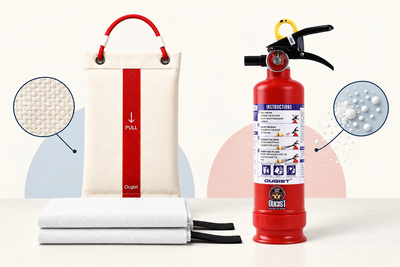
When reviewing vehicle equipment, examine the labeled uses, storage-temperature limits and mounting instructions for OUGIST’s compact 1.3 lb ABC extinguisher. Confirm suitability for your vehicle and secure the equipment as directed. Carrying it does not change the first response to a car fire: stop, get out, move away and call 911.
Read product details and instructions
September 2026 preparedness offer: OUGIST’s National Preparedness Month promotion provides an extra 15% off eligible storewide purchases automatically at checkout, through September 30, 2026 at 11:59 p.m. MDT. Check current availability and final pricing at checkout. This independent OUGIST promotion is not sponsored or endorsed by FEMA or NFPA.
By Mark, Ougist Content Team. Sources and product information reviewed September 13, 2026. Images are illustrative AI-generated visuals; they are not photographs of documented incidents.
Sources and further reading
- USFA: Vehicle fire safety
- Texas Department of Insurance: Car fire safety
- USFA: Smoke alarms
- USFA: Home fire escape plans
- USFA: Choosing and using fire extinguishers
NFPA reference: NFPA: Car Fire Safety tip sheet