SEPTEMBER 2026 · HOME FIRE SAFETY · EMERGENCY PREPAREDNESS
You know where the coffee lives. Does everyone at home know where to meet if the smoke alarm sounds? National Preparedness Month is a useful nudge to make those everyday safety details part of your routine.
What is National Preparedness Month?
Observed each September since 2004, National Preparedness Month is FEMA’s annual campaign encouraging people to prepare for emergencies. FEMA launched the 2026 campaign on September 1 with the theme “Americans Stand Ready.” Its practical priorities include household plans, local alerts and emergency supplies that can be gathered gradually rather than purchased all at once.[1]
That broad message has a very personal application: the place where you cook dinner, charge devices and put your family to bed. This guide focuses on home fire preparedness—one part of a wider household emergency plan.
Check the kitchen. Test the alarms. Walk the escape routes. Then review whether your fire-safety equipment matches the hazards in your home.
1. Start where dinner happens
The U.S. Fire Administration identifies cooking as the leading cause of home fires and home fire injuries. Its advice starts with attention: stay with the pan, and turn the burner off before leaving the kitchen.[2]
Keep towels, paper packaging and other combustible items away from the stovetop. Turn pan handles toward the back, and keep a matching lid or baking sheet nearby. If the heat causes oil to smoke, turn it down or switch the burner off.
For a small, contained pan fire, cover it with a lid and turn off the burner only if you can do so safely. Never pour water onto burning cooking oil or carry a burning pan. If the fire spreads, smoke builds or you are unsure, leave and call 911 from outside.

2. Give your smoke alarms a check-in
Have smoke alarms inside bedrooms, outside sleeping areas and on every level of the home. Follow the manufacturer’s placement guidance, test alarms monthly, and check their replacement dates. Interconnected alarms help everyone hear the warning when one unit activates.[2]
Cooking nuisance alarms are a reason to address placement or use the unit’s appropriate hush function—not to remove its battery. Renters can report missing or faulty alarms to their property manager and ask the local fire department about available assistance.
Make it stick: add a recurring “alarm test” to a household calendar and assign someone to confirm it was done. A reminder works best when somebody owns the task.

3. Turn “we’ll get out” into an actual plan
Draw your home’s doors and windows, identify two possible ways out of each room, and keep those routes clear. Choose a specific outdoor meeting place and practice getting there with everyone who lives at home.[2]
Include children, older adults and anyone who may need assistance. In an apartment building, learn its fire procedures and exit stairs. During a fire, get outside, stay outside and tell responders if someone is missing. Never go back inside for belongings or pets.
Try this tonight: ask each person to name the meeting place separately. Different answers reveal a useful gap to fix while everyone is safe.

4. Match the equipment to the hazard
A fire extinguisher’s label matters more than its color or size. ABC equipment covers specified ordinary-combustible, flammable-liquid and electrical hazards; Class K equipment is designed for cooking oils and fats. Check the exact product instructions and applicable requirements before choosing.
Store equipment where you can reach it from a safe exit route, away from the likely fire source. Check its condition, pressure indicator where fitted, and maintenance instructions. Arrange hands-on training through your local fire department where available.
Only consider tackling a small, contained fire if you know how to use the correct equipment, others have been alerted, the fire department has been called, you are safe from smoke and your exit is clear. If any of those conditions is missing, evacuate.[2] A fire blanket or extinguisher never replaces alarms or an escape plan.
Make September your home-safety reset
Use the checklist above before buying anything. You may already have a suitable lid, a working alarm and the supplies to begin an emergency kit. Review local alerts and household contacts too, so your fire plan fits into a broader emergency plan.
If that review reveals missing or unsuitable fire-safety equipment, these current OUGIST options provide a starting point. Choose for the intended hazard and read the full product label before use.

For cooking-oil hazards
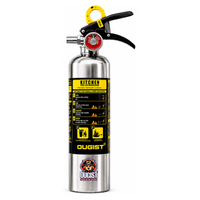
Ougist 40 oz Stainless Steel Class K Kitchen Fire Extinguisher
The 40 fl oz stainless-steel Class K kitchen extinguisher is a dedicated wet-chemical option for cooking-oil and grease hazards. Review its label, placement and operating instructions.
View product details →
For common household hazards
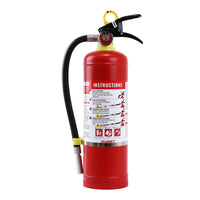
Ougist Essential 2.5 lb ABC Dry Chemical Fire Extinguisher
The Essential 2.5 lb ABC dry-chemical extinguisher addresses the A, B and C hazards specified on its label. Select a model you can safely handle and maintain.
View product details →
For an accessible blanket option
OUGIST Quick Pull Fire Blanket with Designed Canvas Pouch
The 40 × 40 inch fiberglass fire blanket has a canvas pouch and pull straps. Follow the instructions for small, contained flare-ups; replace a deployed or damaged blanket.
View product details →OUGIST NATIONAL PREPAREDNESS MONTH SALE
Make room for a more prepared home.
UP TO 43% OFF
Our National Preparedness Month promotion is now live at Ougist.com: an extra 15% off storewide, applied automatically at checkout. No code needed.
Maximum savings on select items versus compare-at prices, including the extra 15%. For example, the canvas-pouch fire blanket 4-pack is $42.49 after the promotion, compared with $74.99—about 43% less. Prices checked September 10, 2026. Offer ends September 30, 2026, at 11:59 p.m. MDT; cannot combine with other product or order discounts. Final price and availability are shown at checkout.
This is OUGIST’s independent promotion. It is not sponsored or endorsed by FEMA.
Shop the National Preparedness Month Sale →References
- Federal Emergency Management Agency. FEMA Bulletin, September 1, 2026: FEMA Launches 2026 National Preparedness Month.
- U.S. Fire Administration. Home Fires resource collection, including Cooking Fire Safety, Smoke Alarms, Home Fire Escape Plans and Choosing and Using Fire Extinguishers. Accessed September 10, 2026.