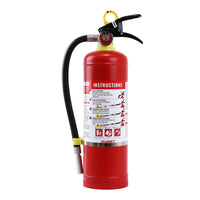
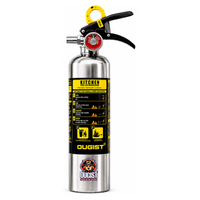
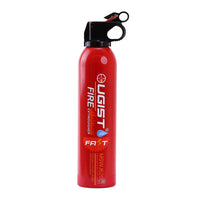
How to Store and Inspect a Fire Extinguisher in Your Car
Buying a portable extinguisher takes a minute. Keeping it ready takes about 30 seconds a month.
That small habit matters because vehicles move, vibrate, heat up, cool down, carry cargo, and experience hard braking.
An extinguisher that is loose, buried, damaged, outside its storage limits, or no longer ready is not a dependable part of a roadside kit.
Secure it. Keep it accessible. Inspect it regularly. Always follow the physical product label and the vehicle instructions.
1 Secure it with the correct holder
Do not leave a pressurized extinguisher loose on a seat, floor, or in the trunk. Use the bracket or holder specified for the product and install it according to the extinguisher and vehicle instructions.
A secure installation should prevent sliding, rolling, or vertical movement.
It should not interfere with:
- Pedals or driver foot space.
- Seat tracks or seat operation.
- Airbags or their deployment zones.
- Seat belts and child-restraint anchors.
- Vehicle wiring, batteries, or service panels.
- Passenger entry and emergency exit.
If correct installation requires drilling, wiring changes, or placing hardware near safety systems, use a qualified installer.

2 Keep it accessible
“In the vehicle” and “reachable in an emergency” are not the same.
Avoid locations that require unloading luggage, folding a seat, finding a hidden key, or reaching into traffic.
At the same time, accessibility never overrides secure mounting or vehicle safety.
Show regular adult drivers where the extinguisher is and how its holder releases. Keep children from playing with it, and never place it where it can become a projectile.
Remember: Never return to a burning vehicle simply to retrieve an extinguisher.

3 Check the readiness indicator
Follow the exact inspection method stated on the physical product label.
- If it has a pressure gauge, confirm the needle is in the manufacturer’s recommended range.
- If it uses another status indicator, confirm that it shows the ready condition.
- If the product has no user-readable indicator, follow its inspection and replacement instructions instead of inventing a test.

4 Inspect the pin, seal, body, hose, and nozzle
Look for:
- A missing or altered pin.
- A broken or missing tamper seal, if the design uses one.
- Dents, bulges, corrosion, leaks, or other body damage.
- A cracked, loose, or blocked hose or nozzle.
- Oil, grease, or debris that could hide damage or make the unit hard to grip.
- An unreadable, peeling, or missing instruction label.
Do not repair, puncture, paint, or modify a pressurized extinguisher yourself.
Follow the manufacturer's service or replacement process.

5 Use the temperature range on the label
Vehicle interiors can become much hotter or colder than the outside air. There is no responsible universal storage-temperature number for every extinguisher.
Find the permitted storage or operating range in the product documentation.
Compare that range with the climate, parking conditions, and seasonal extremes your vehicle experiences.
If the unit may have been outside its permitted range, contact the manufacturer or follow the stated inspection or replacement procedure.
Do not try to solve a temperature problem with a blanket, sealed box, or improvised insulation if doing so blocks access or violates the product instructions.
6 Check the date and after-use instructions
Some extinguishers are rechargeable; others are replaced after use. Service intervals and end-of-life rules also vary.
During the monthly check:
- Find the manufacture, service, or replacement date specified by the product.
- Confirm any required inspection is current.
- Replace missing documentation.
- Record the check in a phone reminder or vehicle-maintenance log.
After any discharge—even a short one—follow the product's service or replacement instructions immediately.

The 30-second monthly checklist
Save this list and make it part of your regular vehicle routine:
30-Second Check
- Mount: secure and undamaged.
- Access: visible or easy to reach without unloading cargo.
- Status: gauge or indicator shows ready, if equipped.
- Pin and seal: present and intact, if equipped.
- Body and nozzle: no dents, rust, leaks, cracks, or blockage.
- Label: readable and facing outward where practical.
- Temperature: stored within the product's stated limits.
- Date: service or replacement schedule is current.
Set a recurring reminder for the first day of each month. Pair the check with tire pressure or windshield-washer fluid so it becomes part of one short vehicle routine.
Choose equipment that fits your vehicle
[PRODUCT NAME] is marked for [PRINTED FIRE CLASS(ES)] and comes with [VERIFIED BRACKET/HOLDER DESCRIPTION].
Review the verified [VERIFIED DIMENSIONS], [VERIFIED STORAGE-TEMPERATURE RANGE], and [VERIFIED SERVICE/REPLACEMENT DETAILS] before deciding whether the product fits your vehicle, installation location, and climate.
Installation and use must follow both the product instructions and the vehicle instructions.
A portable extinguisher is intended only for an appropriate, small, contained fire that matches its marked classes. Never return to or approach a burning vehicle to retrieve it.
Inspect the physical product when it arrives. If its label or instructions differ from the product page, stop and contact us before installing it.
View Mounting and Product Details →Safety References
U.S. Fire Administration — Fire Extinguishers
https://www.usfa.fema.gov/prevention/home-fires/prepare-for-fire/fire-extinguishers/
U.S. Fire Administration — Vehicle Fire Safety
https://www.usfa.fema.gov/prevention/vehicle-fires/
49 CFR §393.95 — Commercial-Vehicle Condition, Location, and Mounting Principle
https://www.ecfr.gov/current/title-49/subtitle-B/chapter-III/subchapter-B/part-393/subpart-H/section-393.95
This commercial-vehicle regulation is cited only as a secure-mounting reference. It is not presented here as a private-passenger-vehicle requirement.